previous index next
Oklahoma Tribal Flag Plaza __ 1993
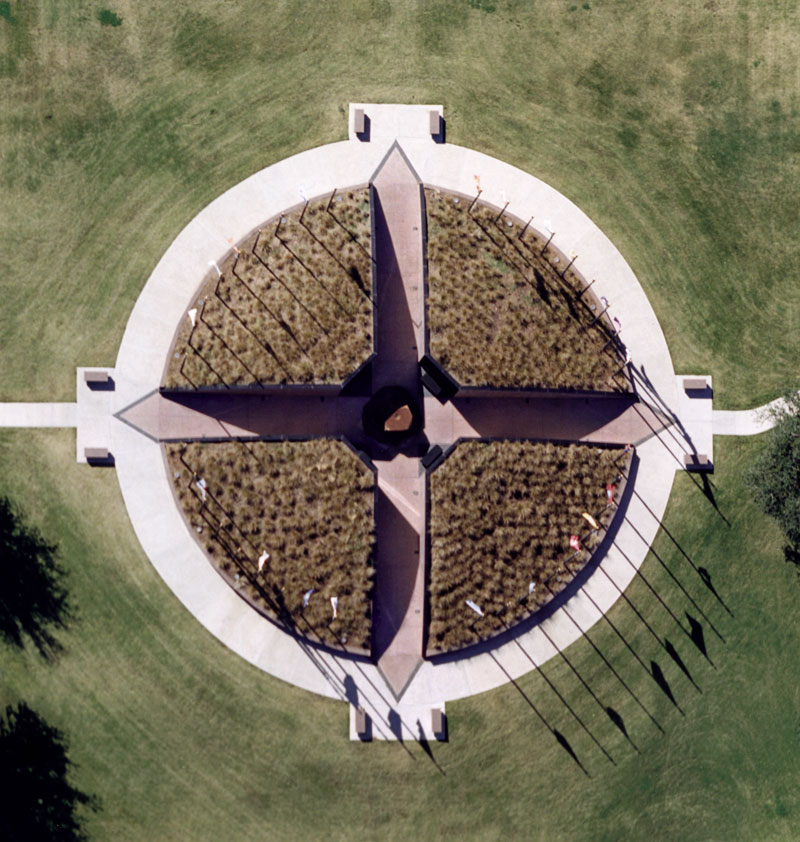
Earth, grass, granite, water and flags. 25 x 100 x 100 feet
. . .
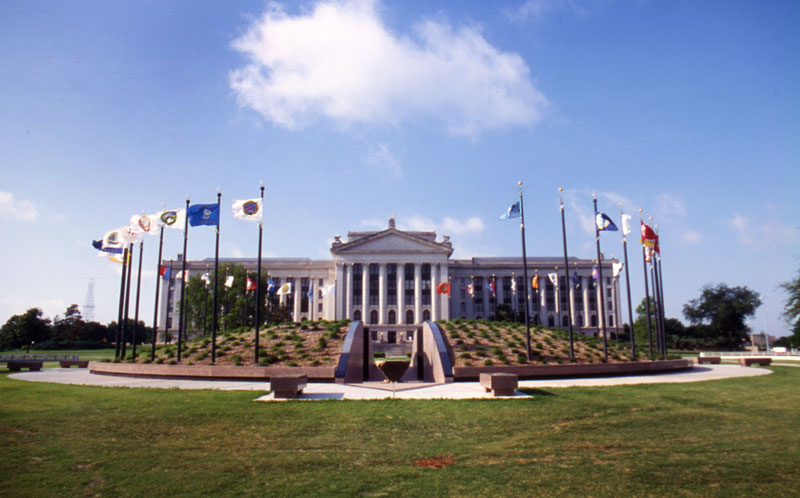
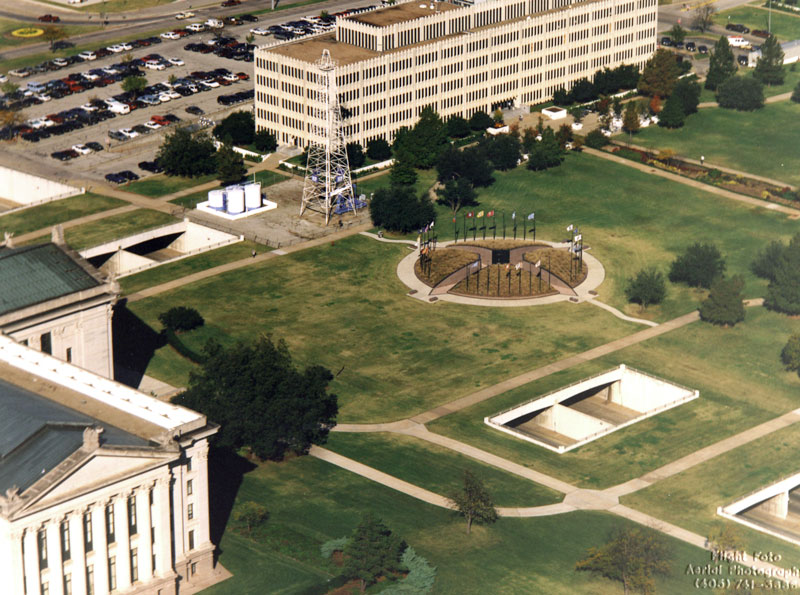
Located on the North Mall of the Oklahoma State Capitol, the Oklahoma Tribal Flag Plaza was originally conceived as a plaza of tribal flags by the State Legislature to honor and recognize the thirty-six tribal governments of Oklahoma.

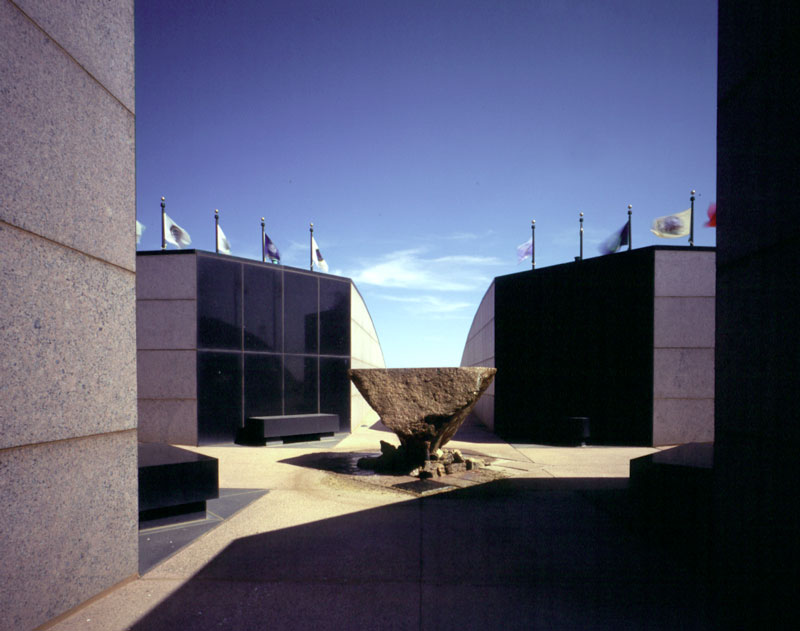
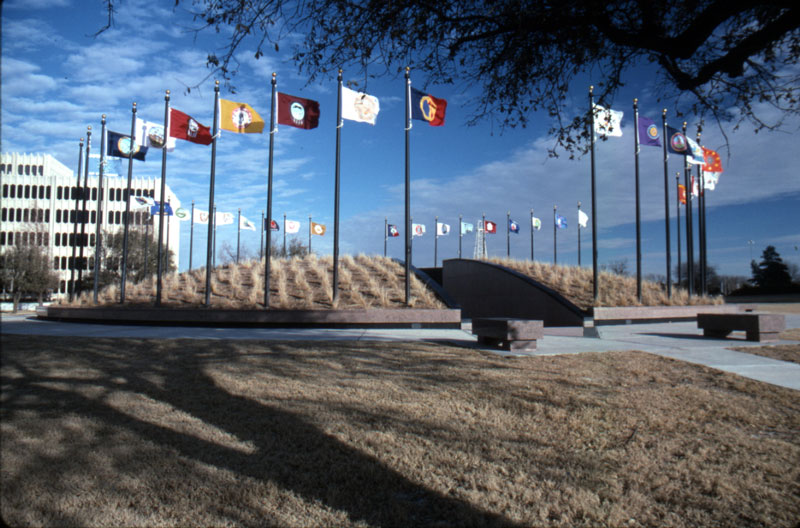
My idea was to create a space that reflected the Native American’s closeness to the earth and the elements of nature. Inspired by the Spiro Mound Builders, an indigenous tribe of the Oklahoma region, the design is an earthen mound divided in quadrants by granite walls. Native grass covers the 100-foot diameter mound of earth, which rises 8 feet above the surface of the ground. Four paths cut through the mound on a north, south, east, and west axis and slope two feet downward to the center. At the center of the mound, ten-foot high walls of highly polished black granite reflect the sky and join the walls of each quadrant to form a protected space around a large granite boulder. Water, one of the essential elements of life, flows from the center of the boulder, which has been cut in half and polished on only the top surface. Around the monument's perimeter, the name of each tribe is carved in a heavy granite edge at the base of the flagpoles. For this project, each of the thirty-six tribes designed a flag to represent their tribe. Each tribe displays their own flag except for one bare flagpole, which represents the Kickapoo Tribe whose tradition prohibits the use of flags.

The final project design was approved in 1989. Because of the enormous scale and cost, the project was divided into three phases. Phase one defined the basic form with concrete walls and the shaping of the mound. The final two phases, which represented 75 percent of the budget, began in 1995 after funding was allocated. Phase three invoved the construction and installation of the fountain located in the center, which was provided by a grant from the Kerr Foundation. The entire project was a collaborative effort with the architectural firm, Meyer Architects and the thirty-six tribal governments of Oklahoma.

Oklahoma State Capitol, Oklahoma City, Oklahoma