previous index next
False Theory __ 1998
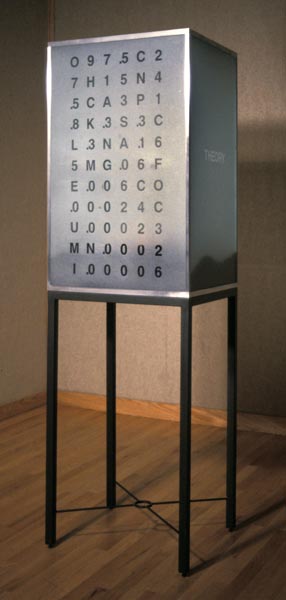
Steel, glass, a book, soil and time. 75 x 23 x 20 inches
. . .
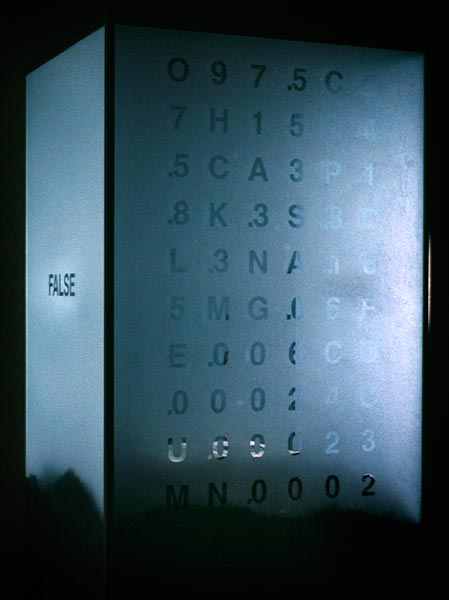
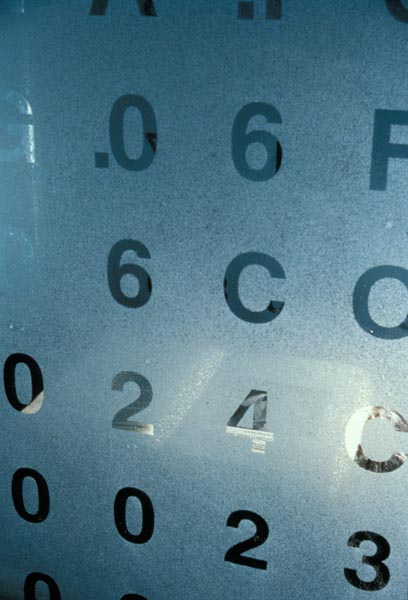
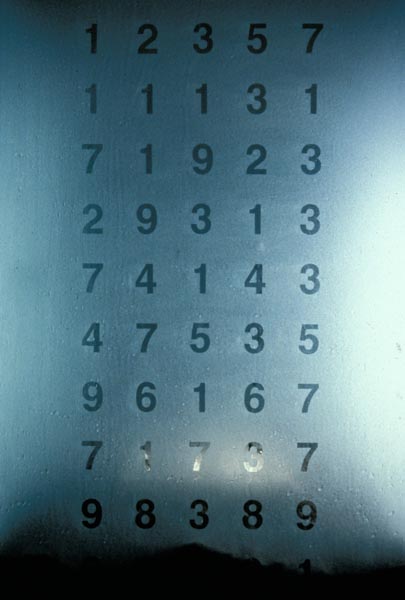
"False Theory" is composed of an etched glass case placed on a steel base. On one side of the glass case are prime numbers, which is a pattern of numbers that do not exist in nature. This set of numbers defines a separation between humans and nature. Clearly, we are a part of nature, but our level of intervention creates a division from the natural world that is uniquely distinct from the world we know. On the opposite side of the case is the reduction of an individual to a set of numbers and letters that compose the chemical elements of a human. On the opposing side of the case is the word false with the word theory visible on the opposite side. Contained within this glass case is a book titled "Eugenics", which is placed on a bed of soil. Over time, the information in the book is gradually being reorganized by nature into a new order.

The philosopher George Santayana said, "Those who cannot remember the past are condemned to repeat it." In the early 20th century the eugenics movement arose in the United States, Germany, and Scandinavia as a moral philosophy to improve humanity by attempting to use science to control and design it.

What we do with our knowledge is subject to what we believe to be correct at that moment in time. The control that science provides us can be easily perverted by our nature to perfect something that may not be perfected. The very element of searching for perfection in humans makes this ideal impossible, because ideals are transitory states that change once they have been achieved. Underlying all this human activity is the persistent activity of nature, which continues its path regardless of our decisions.